



Service Hotline:0536-3125886


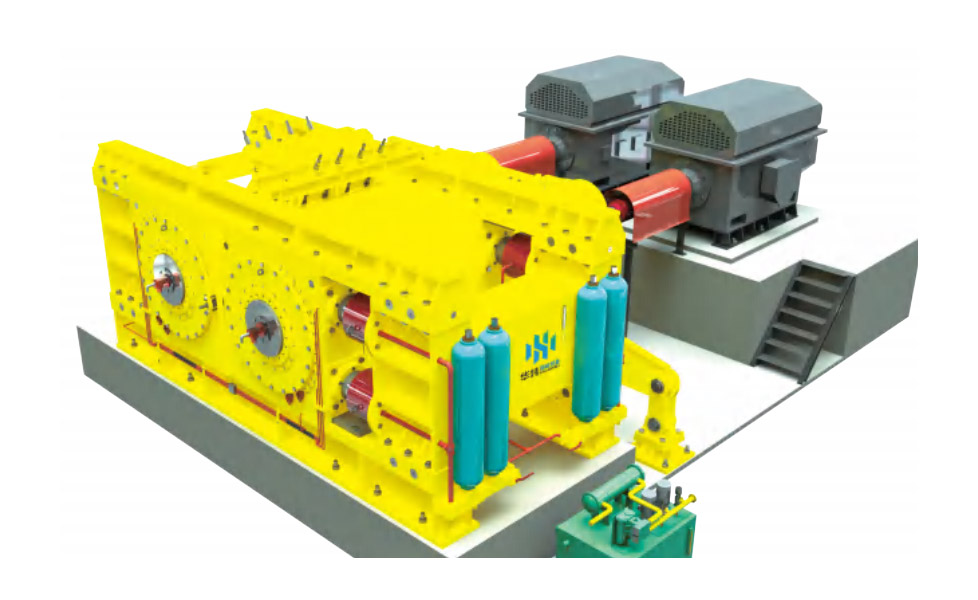
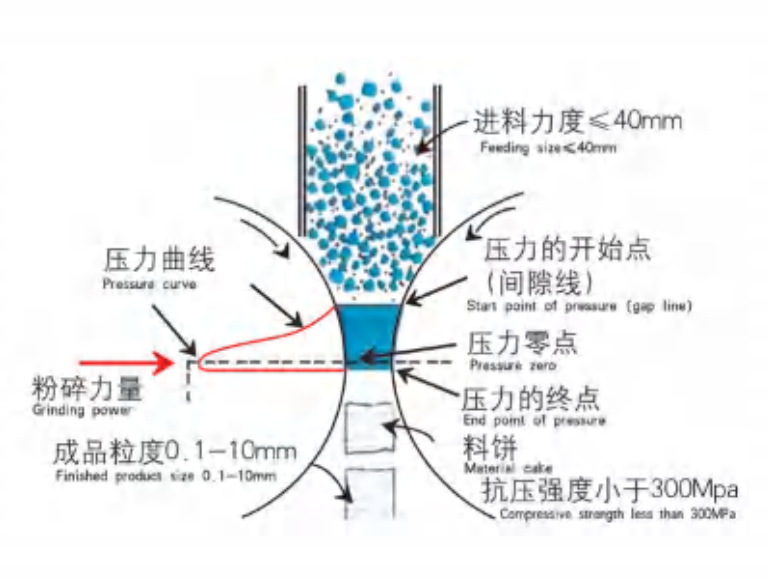
◎ Based on the principle of high-pressure material layer crushing, two opposing extrusion rollers, supported by a hydraulic system, apply an extrusion force to the material rolled between the two rollers that is much greater than its compressive strength, thereby achieving efficient ultrafine crushing and grinding.
◎ After being milled by high-pressure roller mill, some of the material has reached the required particle size and can be selected in time by screening, air separation and other methods to avoid over-grinding. The particles that have not reached the target particle size are also filled with a large number of microcracks, which greatly improves their grindability and thus can significantly reduce the grinding energy consumption of subsequent processes.
Custom-designed high-pressure roller mill systems for ore processing, tailored to the specific characteristics of each project, offer key advantages including:
◎ Based on the ore's strength and grindability, the load-bearing structure and drive system of the high-pressure roller mill are configured to ensure that the high-pressure roller mill can handle the ore with ease.
◎ Based on the hardness and abrasiveness of the ore, select a reasonable wear-resistant treatment method for the roller surface to ensure the roller surface life.
◎ Select an appropriate grinding fineness based on the mineral phase.
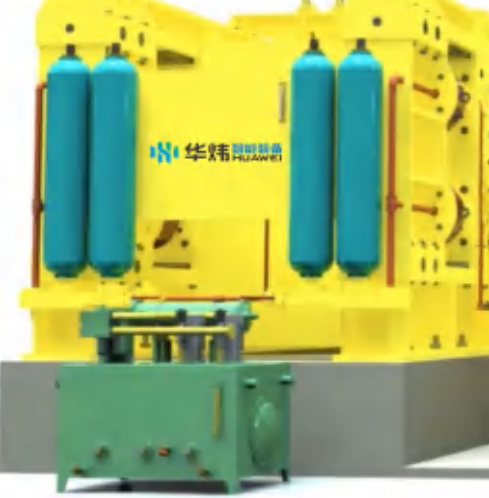
◎ The high-pressure roller mill features a unique anti-impact and corrective feeding device that effectively controls the smooth entry of materials into the mill, stabilizes the working roller gap and operating current, and prevents material collapse that could cause the mill to stop. Feed correction is achieved through differential adjustment of multiple feed valve plates, resulting in a balance between the working roller gap, cylinder pressure, and two-roller current. This enables high efficiency across the entire grinding process in both spatial and temporal dimensions.
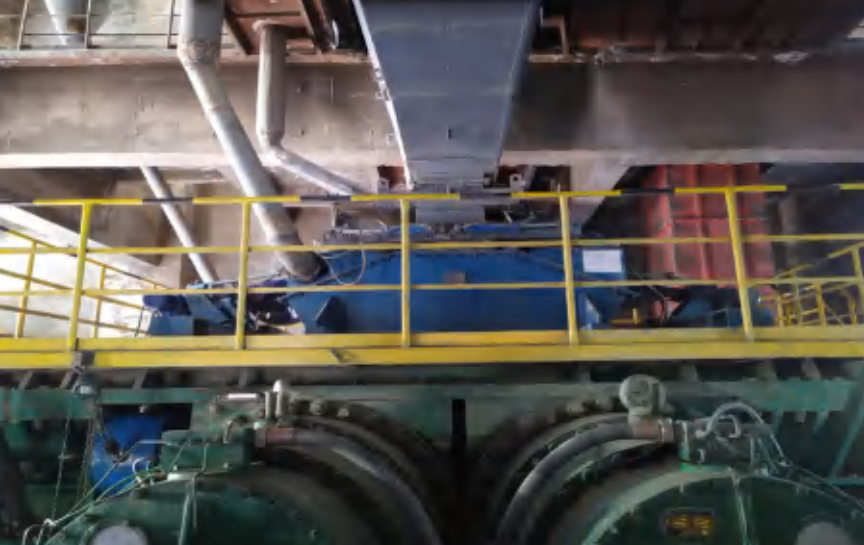
◎ The system adopts a dual high-pressure oil source mode with each other as backups, which ensures extremely high reliability.
◎ The system pressurizes quickly and maintains pressure well, ensuring stable working pressure for the high-pressure roller mill.
◎ The system employs multiple buffer designs to absorb the impact loads caused by fluctuations in high-pressure roller mill operating conditions, thereby improving the comfort of roller mill operation.
◎ In case of an emergency, it can quickly release pressure to ensure equipment safety.
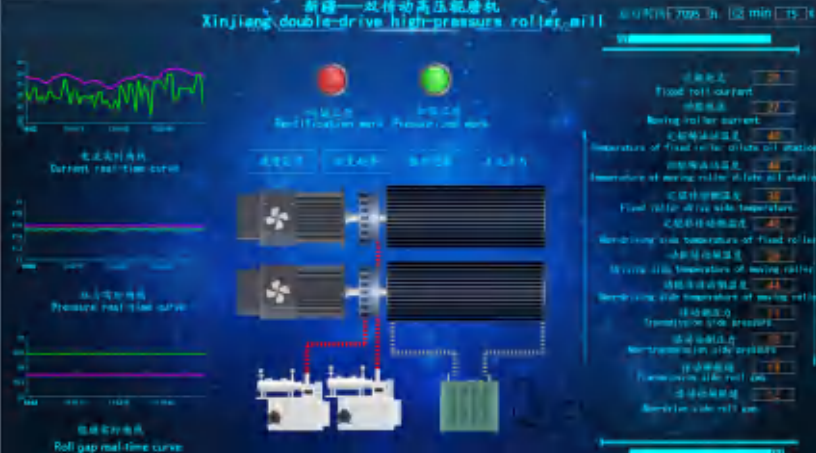
The high-pressure roller mill main control system is the core component for the automated and intelligent management of high-pressure roller mills. This system:
◎ The human-computer interface is user-friendly and easy to operate;
◎ One-click start, automatic management;
◎ Intelligent optimization of operating parameters;
◎ Automatic diagnosis and treatment of common faults.
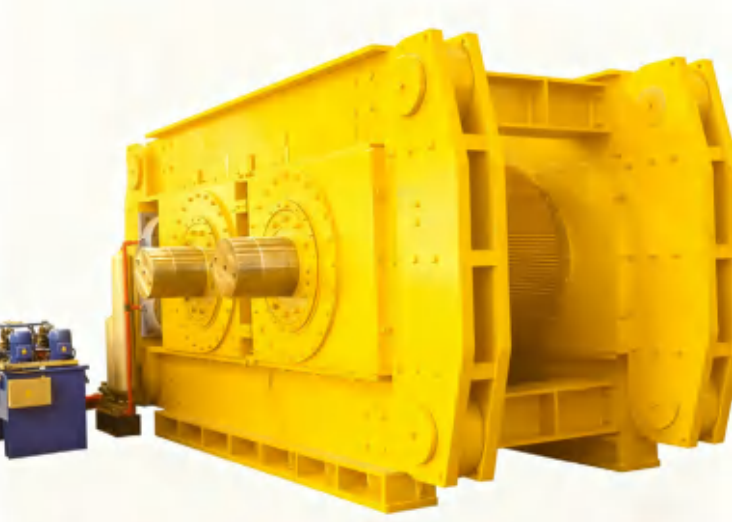
◎ The rack comes in two forms: modular rack and welded rack. Both adopt a modular design, which is high in strength, rigid, and easy to assemble and disassemble.
◎ The roller surface can be made of long-life pinned rollers or economical and durable weld overlay rollers.
◎ The bearing selection is extensive and has a high strength reserve.
◎ The bearing is properly axially positioned and will not experience axial misalignment.

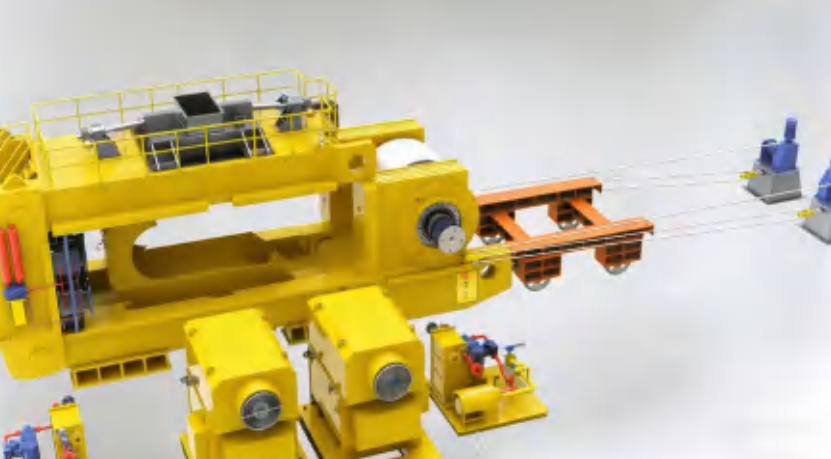
◎ It adopts a combined frame and side-pull system. The roller system is inspected using a track + maintenance trolley + hoisting system, which greatly simplifies the inspection and maintenance of the roller system of large high-pressure roller mills, saves maintenance time, and reduces maintenance equipment and infrastructure investment.
| Specifications and Models | Roller diameter mm | Roll width mm | Through quantity t/h | Feed particle size mm | Installed power kW |
|---|---|---|---|---|---|
| HPGM6030 | 600 | 300 | 8-15 | 10-20 | 2×37 |
| HPGM-120 Series | 1200 | 500-800 | 170-400 | 20-35 | 2×(250-400) |
| HPGM-140 Series | 1400 | 500-1000 | 270-630 | 25-35 | 2×(400-710) |
| HPGM-150 Series | 1500 | 800-1000 | 550-800 | 25-35 | 2×(500-850) |
| HPGM-160 Series | 1600 | 1000-1400 | 760-1200 | 30-35 | 2×(710-1250) |
| HPGM-180 Series | 1800 | 1000-1600 | 700-1700 | 30-40 | 2×(800-1600) |
| HPGM-200 Series | 2000 | 1200-1800 | 950-2000 | 30-50 | 2×(1000-2200) |
| HPGM-220 Series | 2200 | 1400-1800 | 1200-2400 | 30-50 | 2×(1000-2500) |
| HPGM-240 Series | 2400 | 1400-1800 | 1500-2600 | 30-60 | 2×(1600-3000) |
| HPGM-260 Series | 2600 | 1600-2000 | 2800-4000 | 30-60 | 2×(2500-4000) |
| HPGM-300 Series | 3000 | 1600-2000 | 4400-5600 | 30-70 | 2×(4000-5600) |
| Specifications and Models | Roller diameter mm | Roll width mm | Through quantity t/h | Maximum feed particle size mm | Main motor power kW |
|---|---|---|---|---|---|
| HCGM120 Series | 1200 | 500-800 | 200-400 | ≤ 30 | 2×(250-400) |
| HCGM150 Series | 1500 | 600-1200 | 400-900 | ≤ 35 | 2×(450-900) |
| HCGM170 Series | 1700 | 700-1400 | 650-1300 | ≤ 40 | 2×(630-1250) |
| HCGM200 Series | 2000 | 800-1600 | 900-2300 | ≤ 50 | 2×(1000-2240) |
| HCGM240 Series | 2400 | 1000-1700 | 2000-4000 | ≤ 60 | 2×(1800-3150) |
| HCGM260 Series | 2600 | 1200-1800 | 2700-5000 | ≤ 65 | 2×(2500-4000) |
| HCGM300 Series | 3000 | 1400-2200 | 4300-7200 | ≤ 75 | 2×(3550-6300) |