


Service Hotline:0536-3125886


In mineral processing, the crushing and grinding stage plays a crucial role, thus the application of high-pressure roller mills has received increasing attention. However, due to certain limitations in their application, their promotion within the industry has been somewhat restricted. In recent years, my country's economy has continued to develop rapidly, leading to a growing demand for mineral resources. Therefore, in-depth research and innovation of high-pressure roller mills are needed to improve their effectiveness in mineral processing engineering.

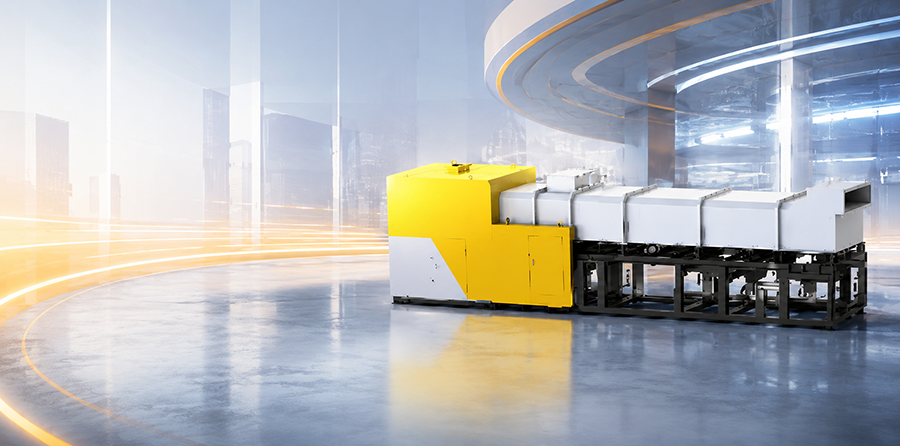
High-pressure roller mill
(I) Working Principle
High-pressure roller mills are based on traditional mill technology and are manufactured using fully automated hydraulic pressure control. They can cause mineral particles to aggregate under high pressure and undergo extremely high-pressure compression. Under pressure, the gaps between the mineral particles continuously decrease, and the pressure continues to rise until a certain level is reached, at which point the material being rolled will break. In high-pressure roller milling, because of the different mixing methods, counter-directional movement helps to improve rolling efficiency.
(II) Structural Features
A high-pressure roller mill mainly consists of a frame and high-pressure rollers, which also constitute its power and pressure source. Different pressures are applied to different materials during operation. The hydraulic cylinder moves along the guide groove during pressure adjustment. During operation, the high-pressure rollers are driven by a reducer, and the material is gradually processed into compacted blocks. Compared to traditional mills, the extrusion rate of a high-pressure roller mill is more stable, but the actual speed is relatively lower. If the operating speed is adjusted to a higher level, material slippage is likely, affecting the crushing effect and the service life of the high-pressure rollers.
II. Iron Ore Processing
The primary purpose of using high-pressure roller mills in iron ore processing is to pre-treat or crush ore materials, thereby improving the overall pelletizing properties of the material. This reduces the incidence of various defects during processing, effectively controlling losses and significantly lowering labor costs. It also increases the capacity and economic efficiency of the crushing system, optimizing the final processing results. Furthermore, with advancements in modern technology, high-pressure roller mills have been further improved, with substantial increases in roller width, roller diameter, and processing capacity, thus enhancing the precision of iron ore processing.
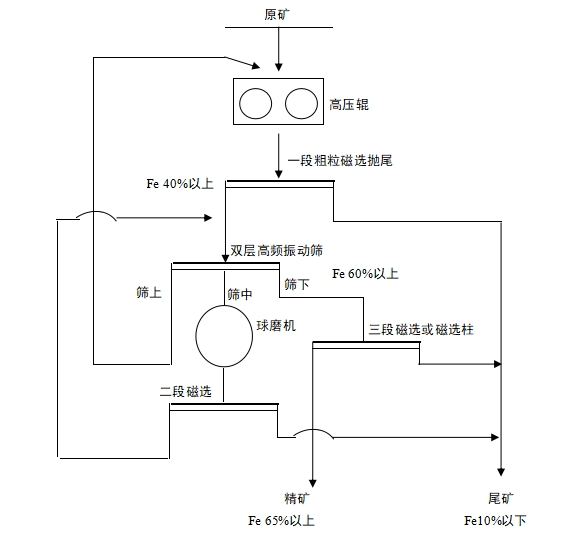
Common iron ore processing techniques:
III. Application of High-Pressure Roller Mills in Xinjiang Ilmenite Ore
Application in Xinjiang Ilmenite Ore: A certain ilmenite ore mine in Xinjiang originally used four ball mills for fine crushing, three in operation and one on standby. The feed particle size was 10mm, and the output particle size was -3mm. Based on the ore characteristics, we modified the process, replacing the four ball mills with one HPGM1480 high-pressure roller mill, significantly reducing the power consumption of fine crushing. The modified process is as follows:
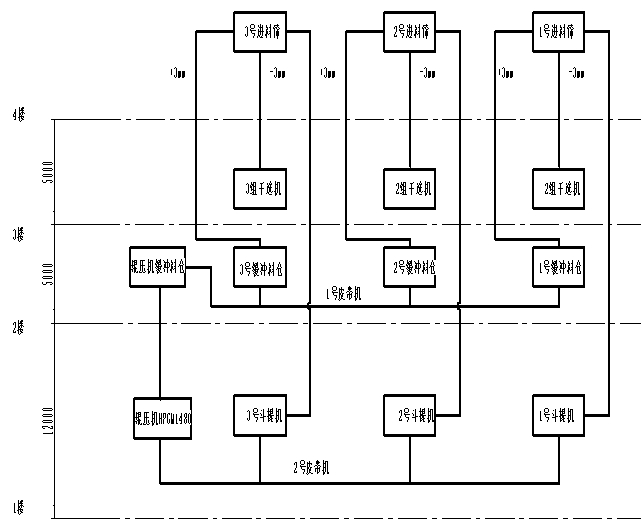
The upgrade required the addition of one HPGM1480 high-pressure roller mill, two belt conveyors, and a buffer silo, along with infrastructure investment for the roller mill's installation foundation.
The HPGM1480 roller mill has an installed power of 1260KW and a throughput of approximately 420-630 tons. Based on the company's material requirements, the expected throughput is around 550 tons. Assuming a throughput of approximately 510 tons per hour for its three production lines (170 x 3 = 510 tons), and considering that the material is first screened (+3mm material accounting for 80%), the hourly throughput is approximately 410 tons. The roller mill's expected first-pass yield is 70%, resulting in 410 x 1.3 = 533 tons, which is close to the expected throughput of 550 tons. After the upgrade, the actual operating throughput of the roller mill is 450 t/h, which is basically consistent with the design.
Benefit analysis:
With an installed power of 1400kW x 3 = 4200kW for the three grinding mills, each mill can process 410 tons per hour, consuming 10.2 kWh of electricity per ton. In contrast, the roller press has an installed power of 1260kW, processing 410 tons per hour, consuming approximately 3.2 kWh of electricity per ton. This results in a saving of 7 kWh of electricity per ton. Based on a daily processing capacity of 8000 tons of ore, this translates to a daily saving of 56000 kWh of electricity. At a price of 0.5 yuan per kWh, this translates to a monthly saving of 840,000 yuan in electricity costs, demonstrating significant economic benefits.
IV. Application Examples
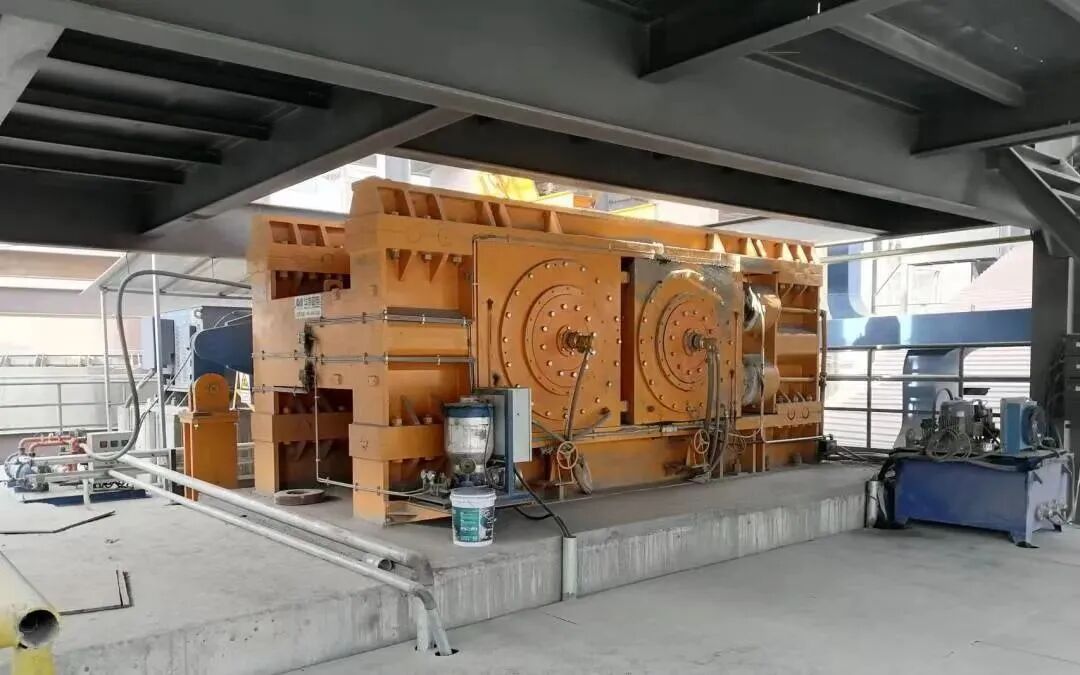
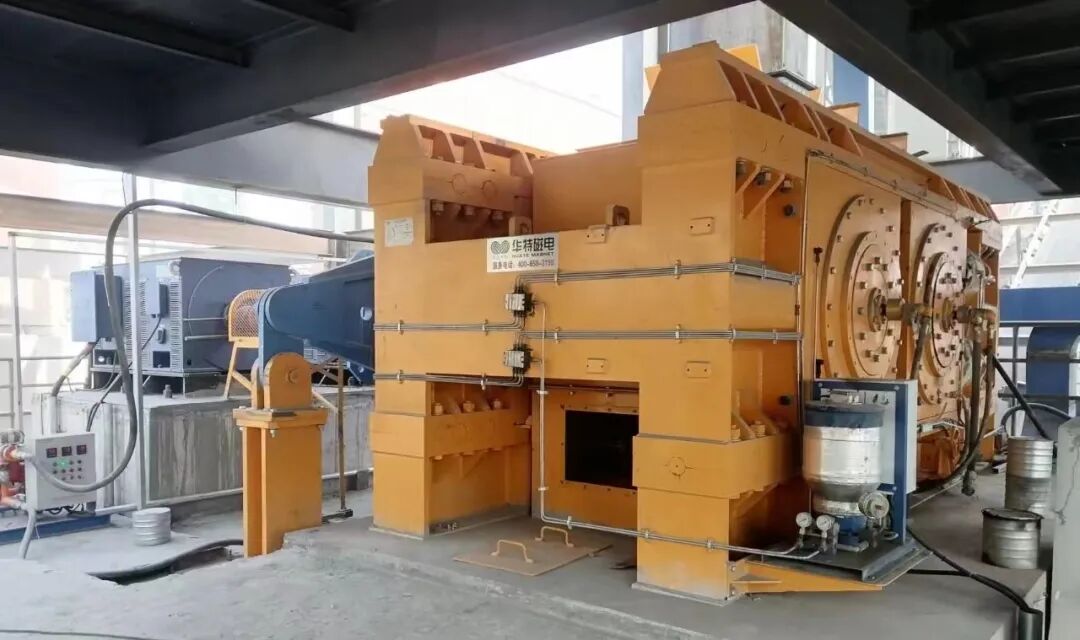
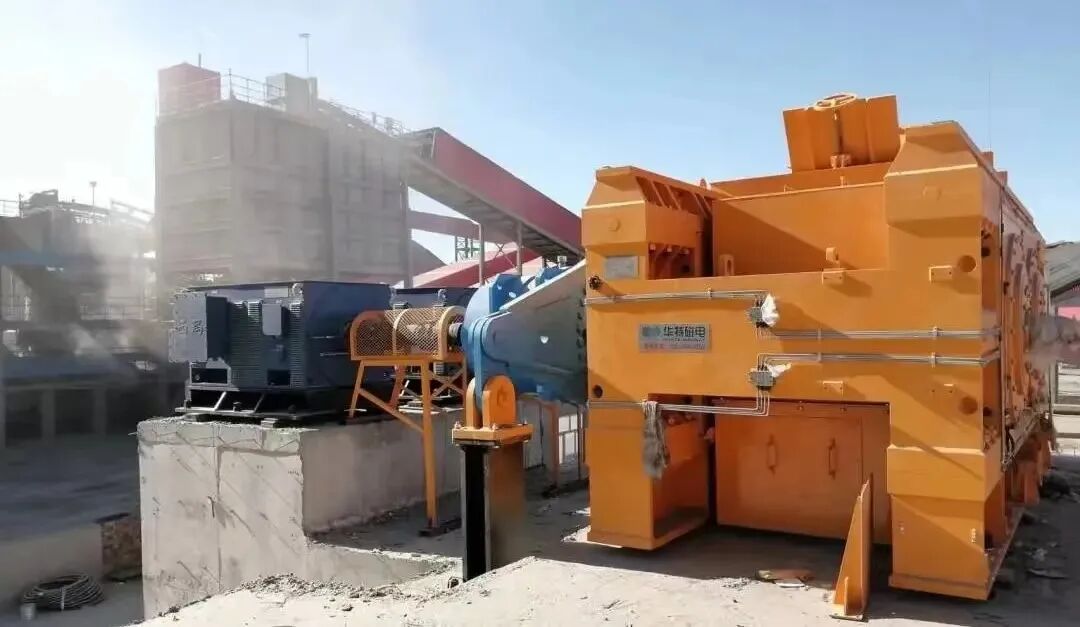
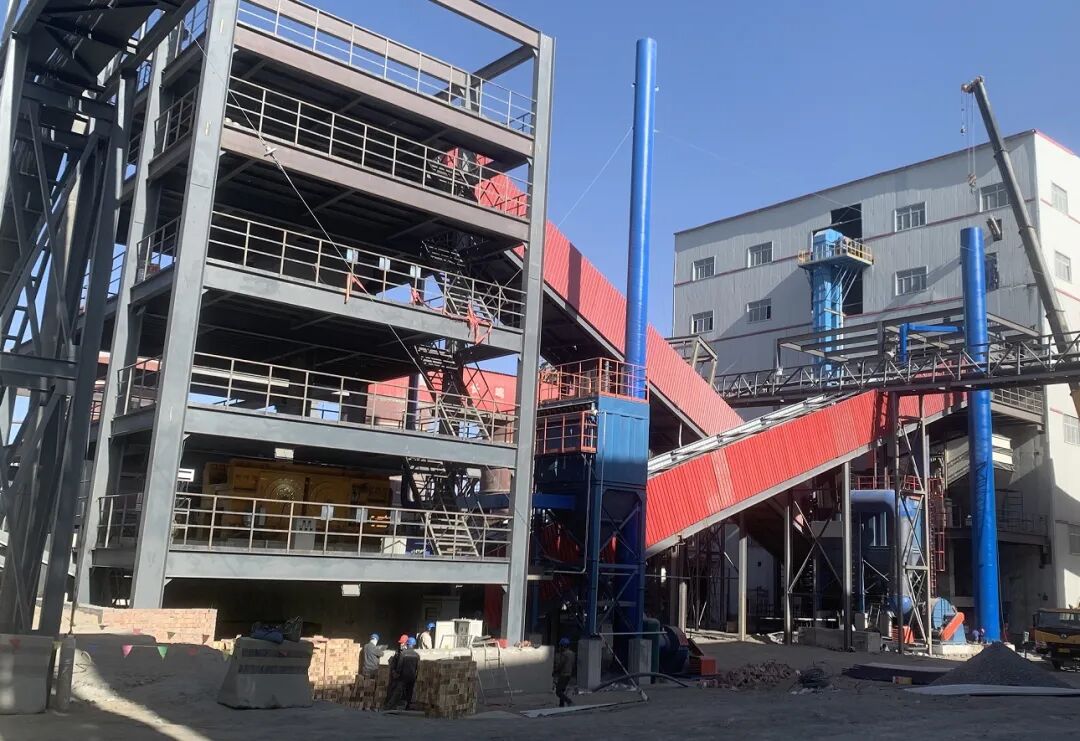
The HPGM1480 high-pressure roller mill developed by Huawei is being used in a mining company in Xinjiang.
Produced by | Huawai Media Convergence Office
Reviewed by | Huawai News Release Review Team