



Service Hotline:0536-3125886


Due to global energy shortages, energy consumption in the crushing process has increasingly attracted attention. Since the advent of high-pressure roller mills in the late 1980s, they have been mainly used in the cement industry and some non-ferrous metal mines. The cement industry has benefited greatly from this energy-saving and steel-saving high-efficiency equipment.
The quantity of ores to be crushed in the metallurgical and mining industries is considerable, and most metal ores are hard and difficult to grind. Currently, ball mills face significant problems with energy consumption, steel consumption, and efficiency, and mineral recovery rates are also significantly affected by the grinding method. The widespread application of high-pressure roller mills in the metallurgical and mining industries, and China's leading position in this field, is the result of years of unremitting exploration and practice by domestic equipment manufacturers, ultimately leading to success.
Technical characteristics of high pressure roller mill
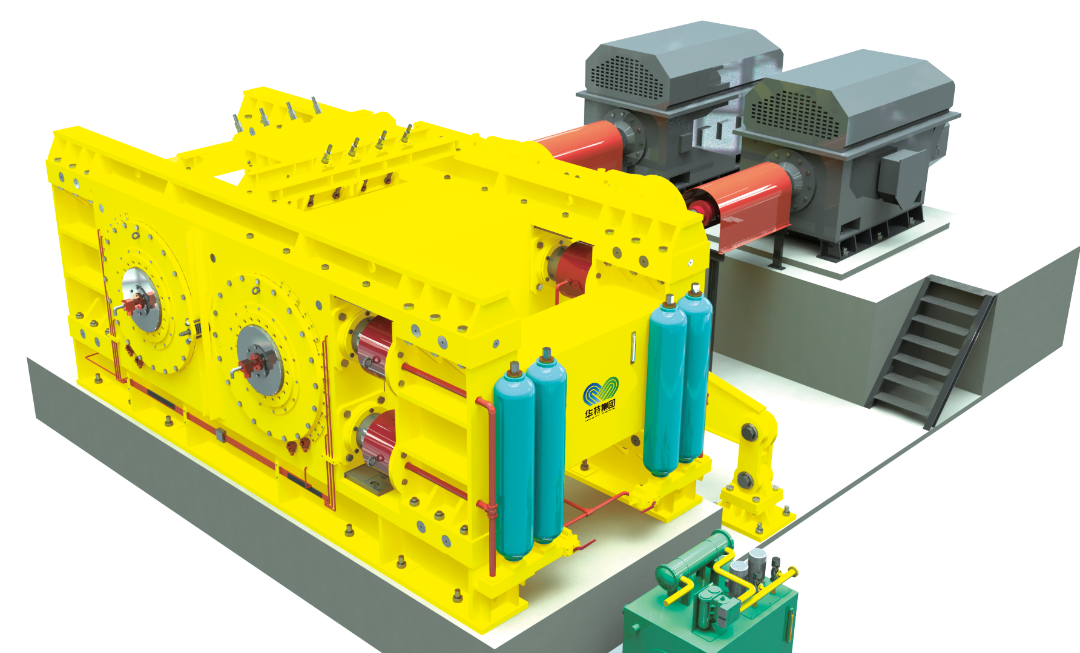
Differences between High-Pressure Roller Mills and Traditional Crushing Equipment:
High-pressure roller mills resemble traditional double-roll crushers in form, but they differ in two key aspects.
Firstly, high-pressure roller mills employ quasi-static pressure crushing, saving approximately 30% of energy compared to impact crushing.
Secondly, they perform layer crushing, where materials crush each other, resulting in high crushing efficiency. The compressive stress between materials can be adjusted via roller pressure. Two rollers rotate in opposite directions, one fixed and the other adjustable. The inter-roller pressure typically reaches 1500–3000 atmospheres, producing crushed products down to 2mm, achieving "more crushing, less grinding," making it a new type of crushing equipment that replaces grinding with crushing. Due to its powerful force, it not only crushes materials but also creates cracks in the internal structure of material particles, thus significantly increasing grinding capacity.
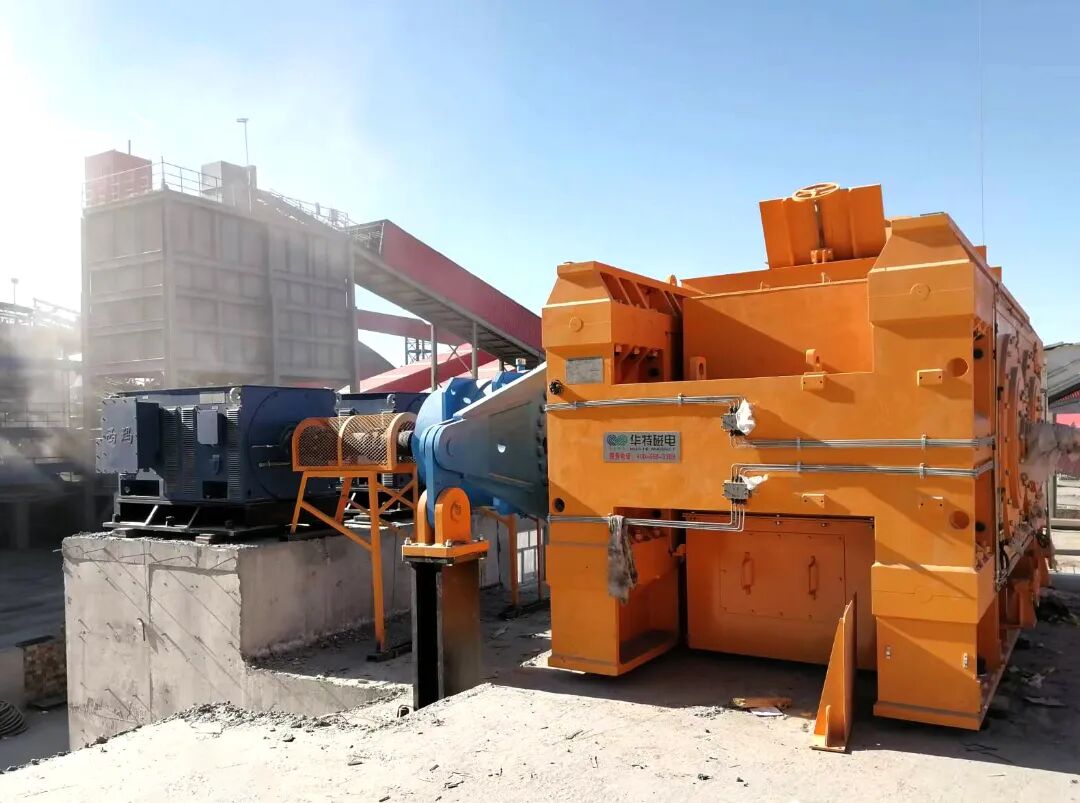
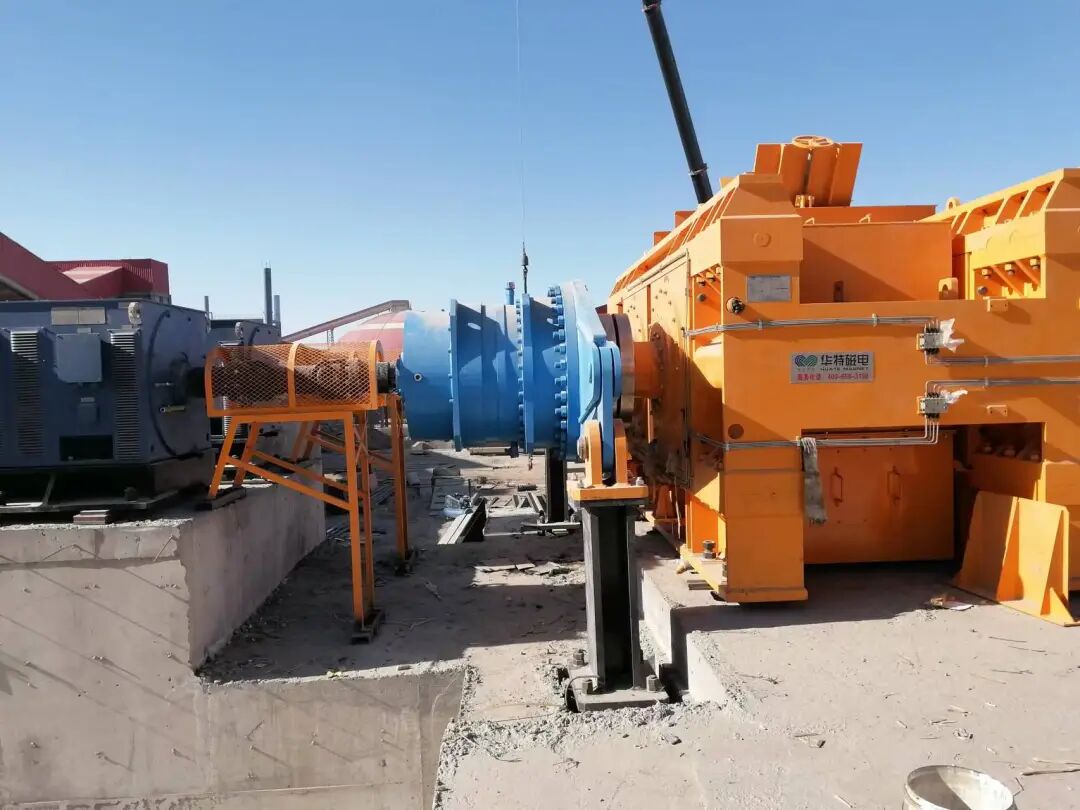
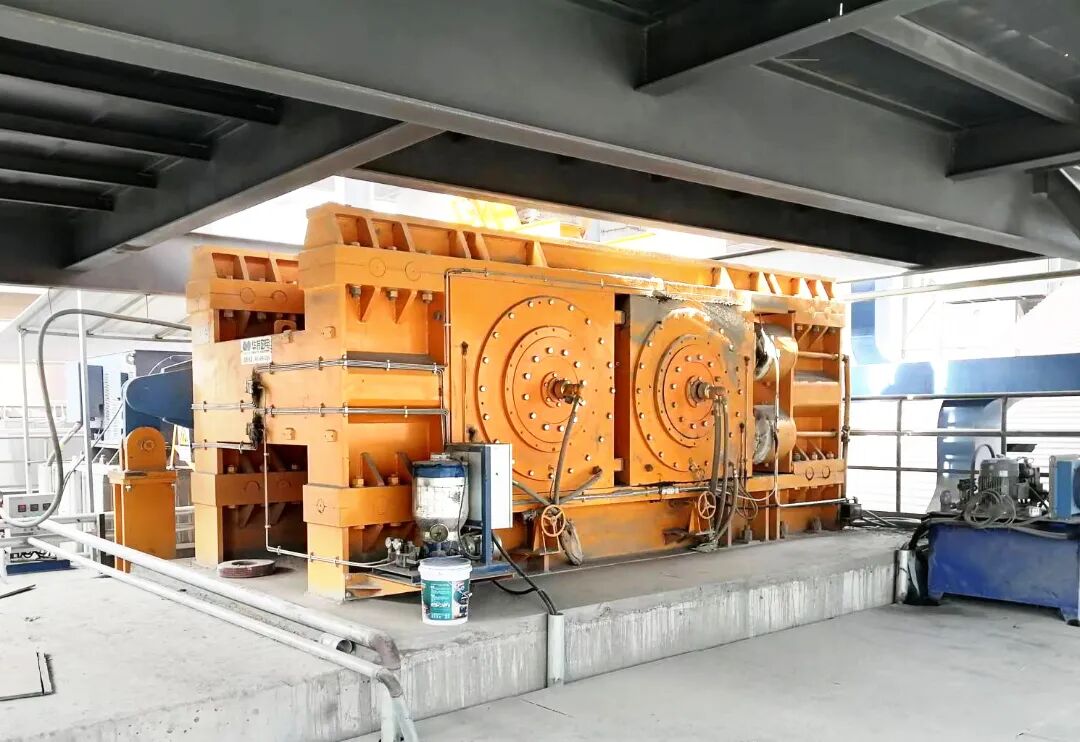
The high-pressure roller mill consists of an electric feeding device, a material blocking device, a drive device, a hydraulic loading device, a support device, and moving and stationary roller assemblies.
Typical process flow of high pressure roller mill in mineral processing
1 Coarse-grained closed-circuit roller mill wet tailing process
In the process of ore processing using this machinery, wet tailings removal from a coarse-grained closed-circuit roller mill is a commonly used technique. The following diagram shows its main process flow:
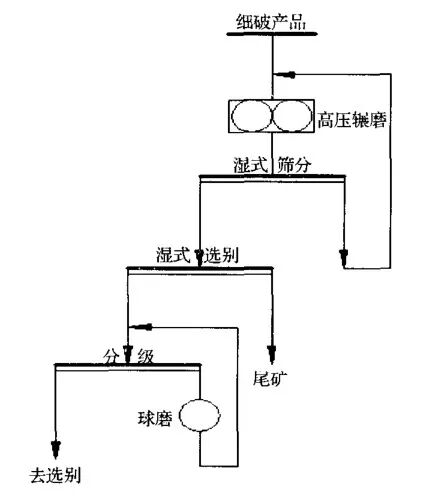
Flowchart of wet tailings removal process for coarse-grained closed-circuit roller mill
In the specific application of this process, the grinding cake is mainly screened through a closed circuit. This ensures that the particle size of the product processed by the high-pressure roller mill is always controlled within a range suitable for separation and tailings removal, thus achieving the purpose of pre-tailings removal. After tailings removal, the amount of material entering the ball mill will be significantly reduced, thereby significantly reducing power loss during grinding.
2 Closed-circuit roller mill part of ball milling process
Through extensive production practice and related experiments, it has been found that ore products obtained through high-pressure roller mills not only have finer particle sizes but also achieve a significant increase in mineral powder content. The content of materials smaller than 0.2mm can reach 30%-40%. This fineness level of material meets the ore beneficiation requirements in most cases. Therefore, such products can be directly beneficiated after grading.
Simultaneously, during the ore crushing and beneficiation process using high-pressure roller mills, due to the edge material effect, a small portion of excessively large ore particles may remain in the extruded cake. If this portion is directly used in grinding or beneficiation operations, it will cause significant fluctuations in the corresponding workflow, thus adversely affecting ore beneficiation production.
Therefore, to avoid such problems during ore beneficiation using this machinery, it is necessary to perform closed-circuit circulating screening on the cake after extrusion processing by the high-pressure roller mill.
This method allows for strict control of the product particle size in the feed cake, preventing excessively large particles from entering the ball milling process and causing fluctuations. It also allows for pre-classification of fine-grained materials that meet standards, enabling them to directly enter the beneficiation process. This approach not only significantly reduces the feed rate in the ball milling process but also effectively avoids over-grinding of fine-grained ores, thereby comprehensively improving the efficiency and quality of mineral processing.
The following diagram shows the main process flow of the ball milling process in the closed-circuit roller mill section:
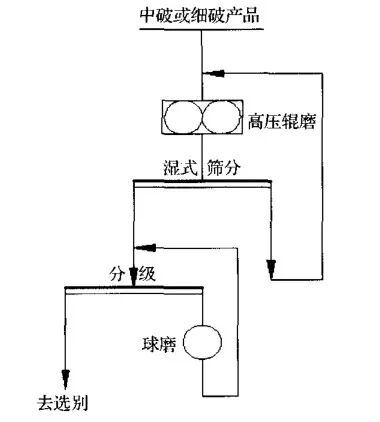
Closed-circuit roller mill part of the ball mill process flow diagram
3 Other typical process flows
Besides the two most commonly used process flows mentioned above, there are several other typical process flows in the crushing and processing of mineral ore using roller mills. One of them is the open-circuit roller mill process covering all particle sizes, and its main process flow diagram is as follows:
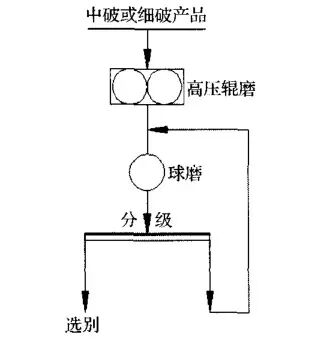
Open-circuit roller mill ball mill process flow diagram
Another type is the ball milling process with a roller mill edge material recycling method. The following is its main process flow diagram:
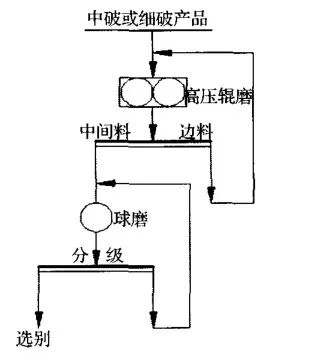
Flowchart of ball mill process with roller mill edge material recycling
Application Examples

Produced by | Huawai Media Convergence Office
Reviewed by | Huawai News Release Review Team